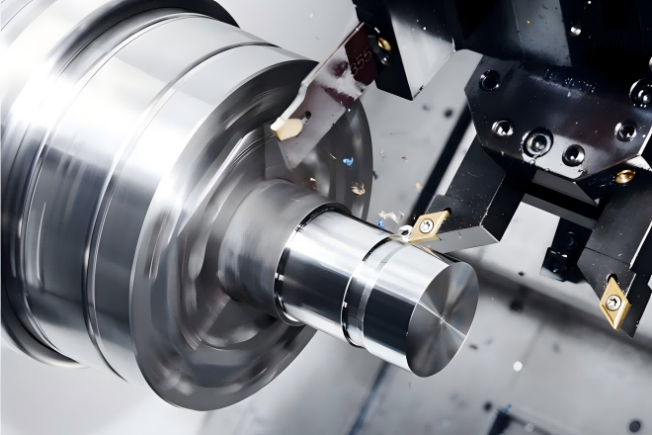
While metals like aluminum and stainless steel dominate high-stress industrial applications, engineering plastics have become indispensable in modern product development. Thanks to advancements in material science, high-performance polymers now offer exceptional strength-to-weight ratios, chemical inertness, electrical insulation, and low friction coefficients.
For parts requiring rotationally symmetrical features—such as bushings, custom seals, plastic gears, and electronic housings—CNC turning is often the premier manufacturing method.
This guide explores the key benefits of CNC turning engineering plastics, breaks down top material choices like ABS, POM (Delrin), and PEEK, highlights critical machining considerations for polymers, and explains how to scale seamlessly from plastic prototypes to high-volume production.
Why Machine Engineering Plastics Instead of Molding Them?
Engineers frequently face a key choice during early-stage product design: should a plastic part be 3D printed, injection molded, or CNC machined?
While plastic injection molding is the gold standard for high-volume serial production, CNC machining offers distinct technical and financial advantages during design validation and low-volume production:
Zero Tooling Costs: Injection molding requires expensive steel or aluminum molds that take weeks to design and machine. CNC turning cuts parts directly from extruded plastic rods, eliminating upfront tooling expenses.
Superior Material Density and Integrity: Machined plastic components are carved from solid stock. This avoids internal voids, sink marks, or weld lines that can weaken molded or 3D-printed parts.
Tighter Tolerances: CNC turning centers achieve precision tolerances down to a few thousandths of an inch, outperforming most 3D printing technologies and un-trimmed molded parts.
Speed to Market: Turning plastic prototypes allows hardware startups and engineering teams to evaluate physical parts in their end-use material in days rather than waiting weeks for mold fabrication.
Top Engineering Plastics for CNC Turning
Choosing the right polymer depends on your application’s mechanical loads, operating temperatures, and chemical exposure. Here are the most widely specified plastics for CNC turned parts:
ABS (Acrylonitrile Butadiene Styrene)
ABS is an economical, general-purpose thermoplastic known for its high impact resistance, good toughness, and excellent machinability.
Properties: Lightweight, easily post-processed (sanded, painted, or glued), and dimensionally stable.
Best Turned Parts: Electronic enclosure caps, rapid prototype housings, consumer product components, and protective covers.
POM / Delrin (Polyoxymethylene / Acetal)
POM—commonly known by its brand name Delrin—is the workhorse material for precision mechanical turned components.
Properties: High mechanical strength, exceptional stiffness, low coefficient of friction, and high resistance to wear and moisture absorption. It produces clean, continuous chips during turning, yielding superb surface finishes.
Best Turned Parts: Plastic gears, bushings, bearings, rollers, manifold valves, and precision spacers.
PEEK (Polyetheretherketone)
PEEK is an ultra-high-performance engineering thermoplastic specified for extreme environments where metals would corrode or add excessive weight.
Properties: Outstanding thermal stability (operating temperatures up to 250°C), exceptional chemical inertness, high tensile strength, and full biocompatibility.
Best Turned Parts: Aerospace electrical connectors, medical surgical trial components, chemical processing valve seats, and semiconductor handling pins.
Polycarbonate (PC) and PTFE (Teflon)
Polycarbonate (PC): Offers extreme impact strength and high optical clarity, ideal for turned light covers, sight glasses, and transparent fluid chambers.
PTFE (Teflon): Extremely low friction coefficient, non-stick properties, and high chemical resistance, making it perfect for custom gaskets, seals, and labware fittings.
Critical Engineering Challenges When Turning Plastics
While turning metal relies on heavy cutting forces and high tool rigidity, machining engineering plastics requires a different approach. Polymers exhibit distinct physical traits that machinists must manage carefully:
- Thermal Expansion and Heat Dissipation: Plastics have much lower thermal conductivity than metals. Heat generated by the cutting tool stays localized in the workpiece, causing the plastic to expand. If unmanaged, the part may shrink after cooling, causing out-of-spec dimensions.
- Part Deformation Under Clamping Pressure: Plastics have a lower elastic modulus than metals. Excessive chucking pressure on a lathe can deform hollow cylindrical tubes or thin-walled parts. Using specialized soft jaws or collets distributes clamping forces evenly.
- Burr Formation and Sharp Tooling: Ductile plastics like Nylon or PTFE tend to push away from dull tools rather than shear cleanly. Machinists must use razor-sharp, polished cutting inserts with high rake angles to sheer the plastic cleanly and prevent burring.
Scaling Seamlessly from Machined Prototypes to Production
One of the greatest benefits of plastic CNC turning is how easily it integrates into your broader manufacturing roadmap.
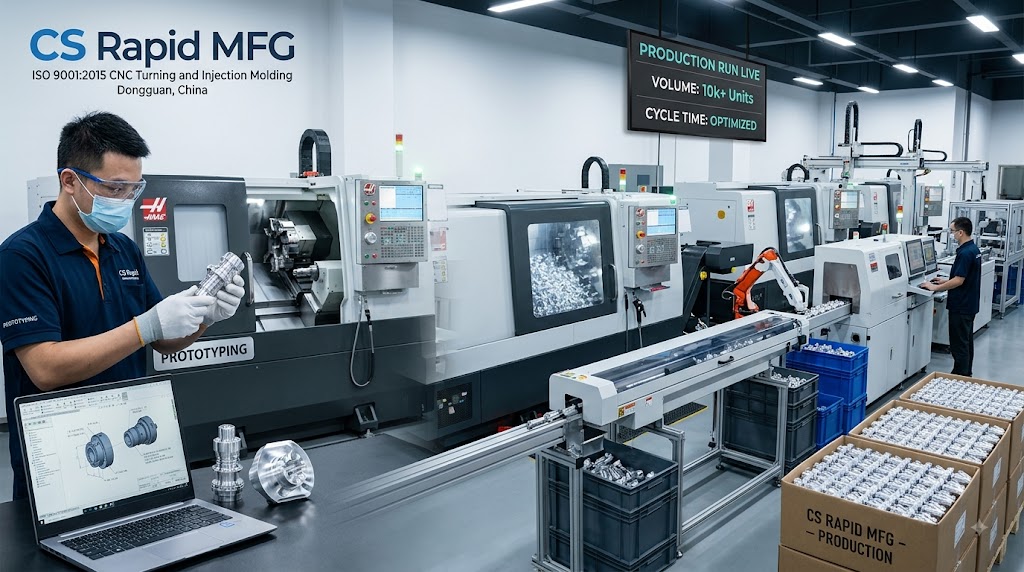
During the initial R&D and pilot testing phase, you can machine 1 to 100 functional prototypes from POM or ABS using CNC turning. Once your design is validated and demand scales to tens of thousands of units, you can transition your production to injection molding to drastically lower cost per unit.
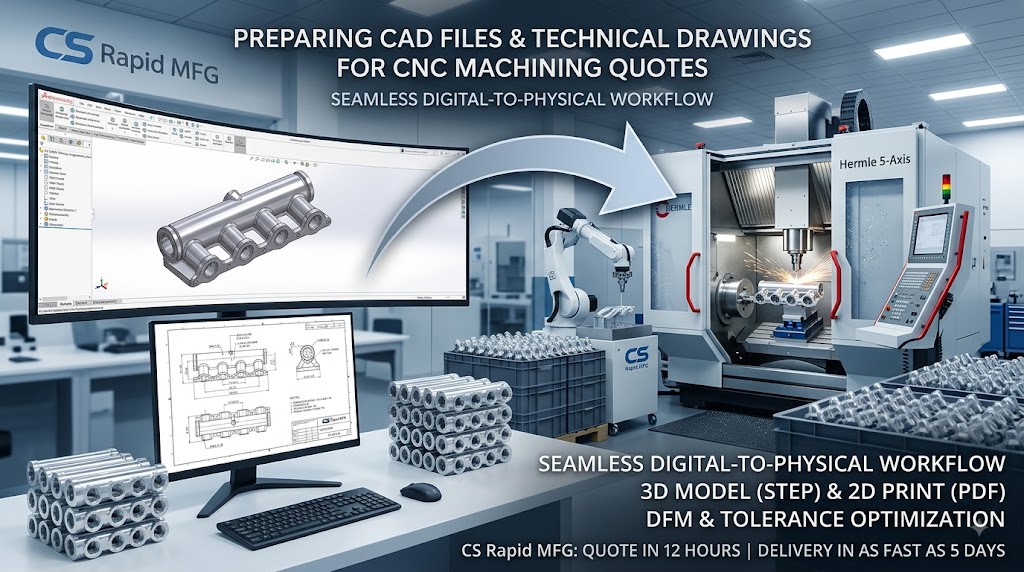
Because CS Rapid MFG provides both CNC machining and injection molding under one roof, your project transitions seamlessly without switching suppliers or re-verifying quality standards.
Partner with CS Rapid MFG for Custom Plastic CNC Turning
Whether you need a single PEEK medical prototype or low-volume production of POM mechanical bushings, CS Rapid MFG has the technology and expertise to deliver high-precision plastic components.
Operating out of Dongguan, China, our modern facility is ISO 9001:2015 certified and equipped with over 80 advanced multi-axis CNC lathes and milling centers.
Why Innovative Engineers Choose CS Rapid MFG:
- Lightning-Fast Delivery: Complete your custom plastic turned parts in as fast as 5 days.
- No Minimum Order Quantity (MOQ): Support for 1-off functional prototypes up to high-volume production.
- Unbeatable Cost Efficiency: Enjoy pricing that is +30% lower than western competitors while benefiting from global supply chain efficiency.
- Free Expert DFM Analysis: Receive a preliminary Design for Manufacturability (DFM) report within 12 hours of submitting your request.
Ready to turn your plastic CAD designs into physical precision parts? [Get an Instant Quote at CS Rapid MFG] by uploading your 2D and 3D files today.