5-Axis CNC Machining Services
Machine complex, multi-sided components in fewer setups. CS Rapid MFG combines simultaneous 5-axis capability, experienced engineering support and controlled inspection to move your parts from prototype to production.
- Complex geometry in one setup
- Tolerances down to ±0.001 in
- No minimum order quantity
80+
3-, 4- & 5-axis CNC machines
12 Hours
Typical quotation response
5 Days
Fast-turn parts available
ISO 9001
Certified quality system
More access. Fewer setups. Better consistency.
A 5-axis machining center moves the cutting tool across X, Y and Z while rotating around two additional axes. This gives the tool direct access to angled faces, undercuts and freeform surfaces without repeatedly re-fixturing the workpiece.
Fewer setups reduce datum-transfer error and help maintain positional relationships across critical features. Shorter tools can also improve rigidity, surface finish and access to deep pockets.
One-clamp machining
Reach five sides of a part with minimal repositioning.
DFM support
Practical feedback on geometry, tolerances and cost.
Engineered for precision, speed and scale
From one-off validation parts to repeat production, our team plans the process around your drawing requirements and end use.
Advanced Equipment
Hermle and DUG 5-axis resources support demanding contours, angled bores and multi-face features.
Inspection at Every Stage
Dimensional, visual and final inspections are matched to your drawing and critical requirements.
Production Since 2008
Experienced engineers and machinists help resolve difficult tool access, workholding and finish challenges.
Prototype to Production
No MOQ: order a single functional prototype, bridge quantities or scalable production runs.
Simultaneous 5-axis vs. 3+2 machining
Both approaches use five machine axes. The right choice depends on surface continuity, feature access, rigidity and cost.
Simultaneous 5-Axis
All five axes can move continuously during cutting.
- Best for freeform surfaces and continuously changing tool angles
- Fewer interruptions and smooth tool engagement
- Strong fit for impellers, turbine features and intricate medical parts
3+2 Positional Machining
The rotary axes position the part, then remain fixed while three-axis cutting occurs.
- Efficient for angled holes, multiple faces and prismatic features
- Rigid cutting with straightforward programming
- Often cost-effective when full simultaneous motion is unnecessary
Measured results, not assumptions
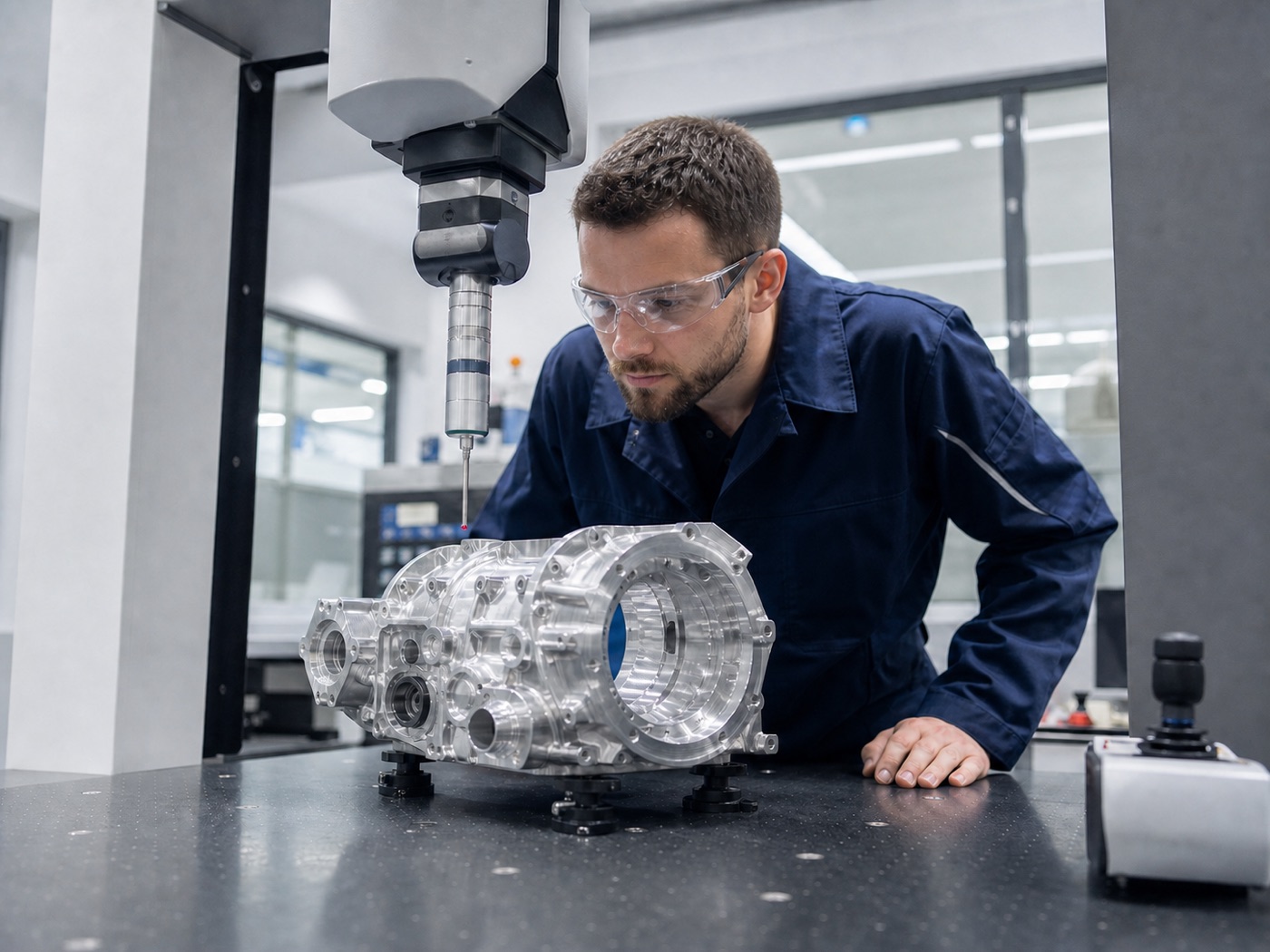
Quality planning begins before the first toolpath. We review your CAD, drawings, tolerance stack and finish requirements, then define inspection points for critical dimensions.
ISO 9001:2015
Certified quality management.
IATF 16949:2016
Automotive quality certification.
CMM inspection & reports
Verification and inspection documentation are available on request.
Machinable metals and engineering plastics
Choose a material for strength, weight, thermal behavior, chemical resistance or appearance. Our engineers can help balance performance with machinability and cost.
Materials: Aluminum 6061 / 7075 · Stainless Steel · Tool & Alloy Steel · Titanium · Brass & Copper · POM / Delrin · PEEK · Nylon · ABS · PMMA
Finishes: As-machined, bead blasting, anodizing, hard anodizing, powder coating, polishing, passivation, plating and more.
Complex parts for demanding products
Lightweight Structures
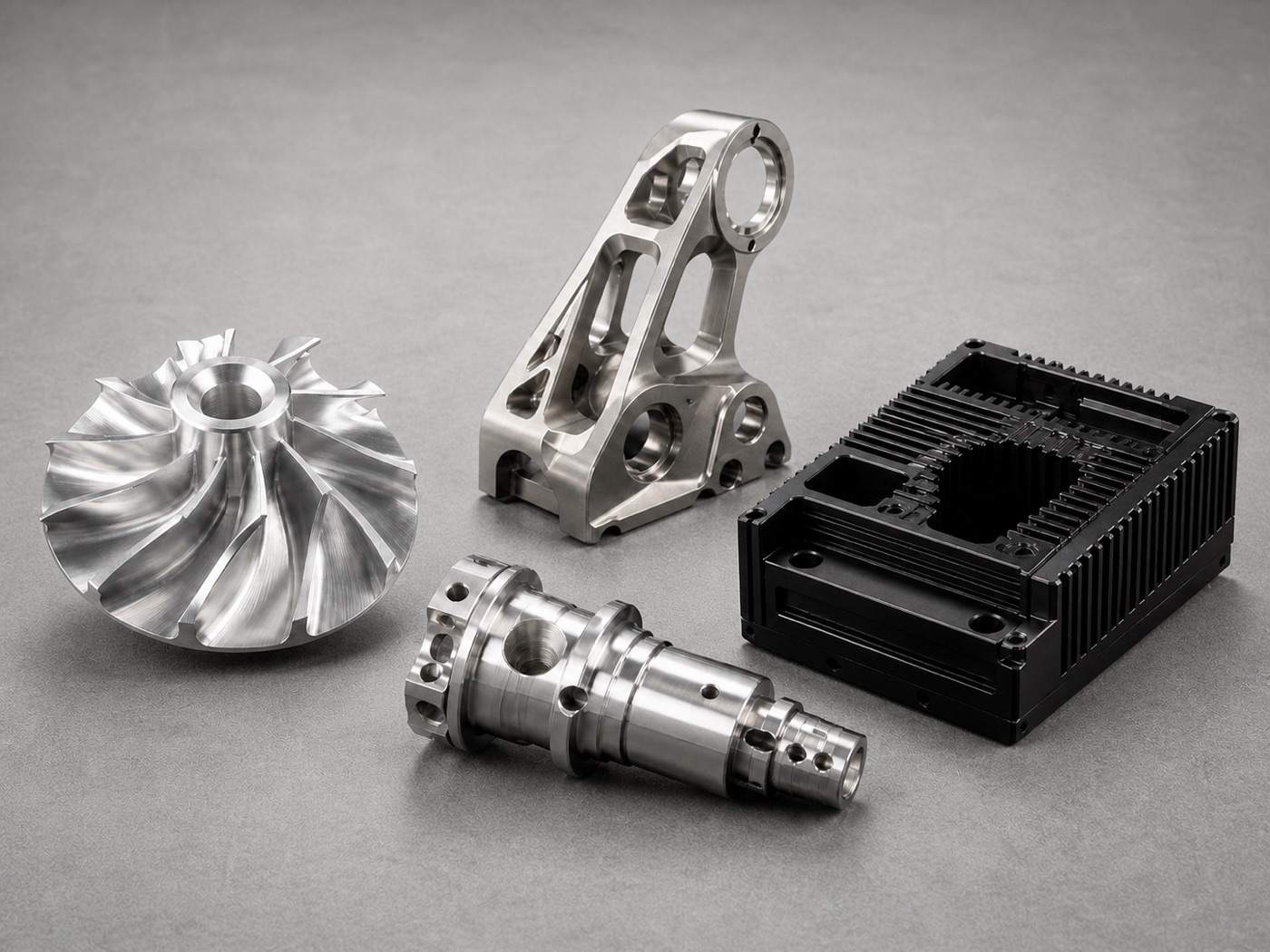
Brackets, housings, impellers and components with complex contours.
Performance Components
Prototype and production parts, fixtures, drivetrain and thermal components.
Precision Instruments
Surgical instruments, device components and ergonomic freeform geometries.
Motion & Automation
Lightweight joints, end effectors, structural frames and precision interfaces.
Housings & Thermal Parts
Enclosures, heat sinks and dense multi-feature aluminum components.
Tooling & Equipment
Mold inserts, jigs, fixtures and specialized machinery components.
From CAD file to finished part
1. Upload Files
Share your CAD, drawings, quantity, material and finish requirements.
2. Engineering Review
We review manufacturability, tolerances and the most suitable process.
3. Machine & Inspect
Your parts are produced with in-process and final quality checks.
4. Pack & Deliver
Approved parts are protected, documented and shipped to your location.
Have a complex part ready?
Send your CAD files for a fast, confidential manufacturing review and quotation.
5-axis CNC machining FAQs
Choose it for parts with features on several faces, compound angles, deep cavities or sculpted surfaces—especially when reducing setups improves accuracy or lead time.
Typical capability reaches ±0.001 in for suitable features, but achievable tolerance depends on geometry, material, feature size and inspection method.
STEP and IGES are preferred for 3D geometry. Add a PDF drawing for tolerances, threads and finish requirements.
Yes. CS Rapid MFG has no minimum order quantity and supports prototypes, bridge production and repeat orders.