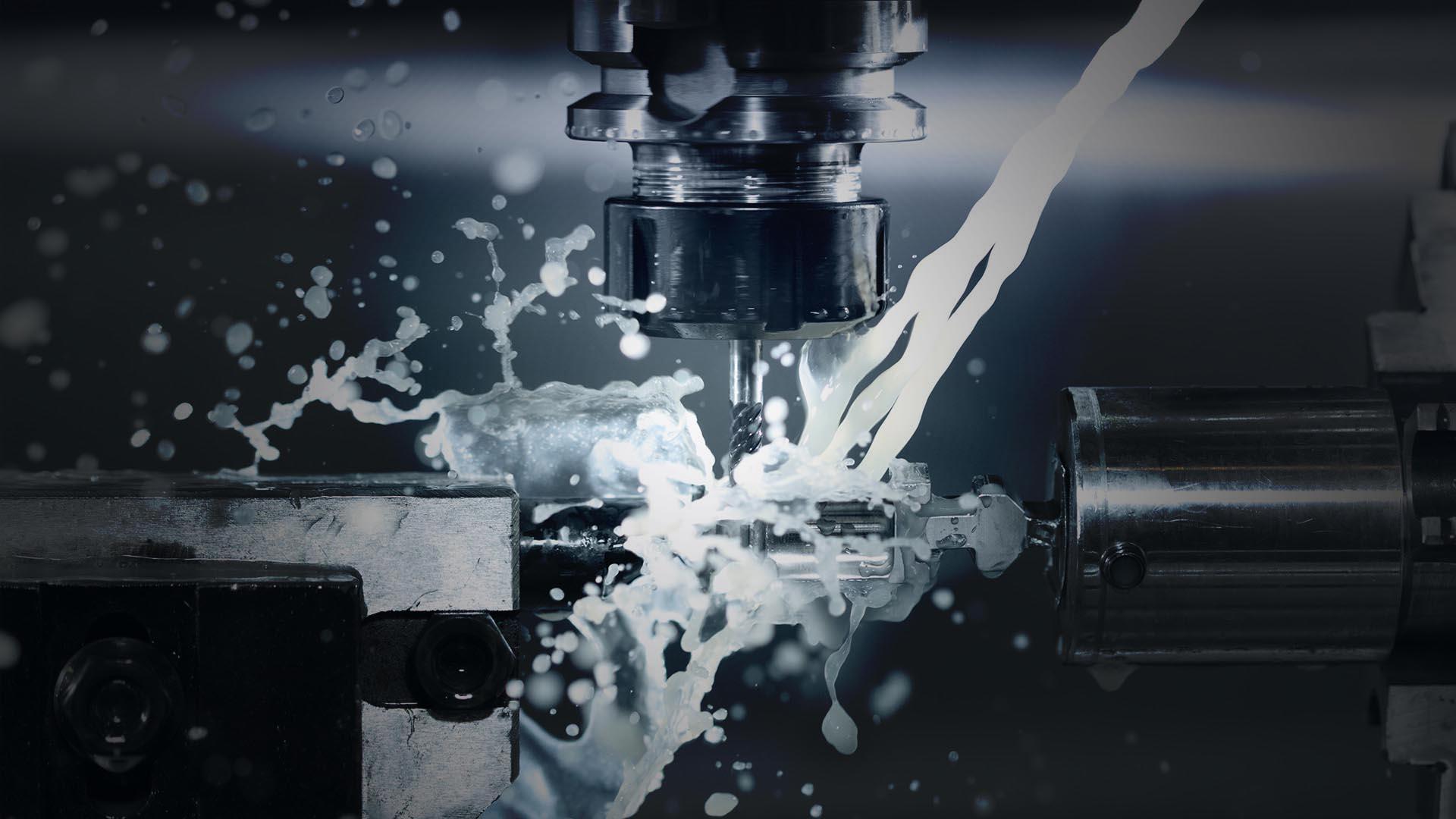
In subtractive manufacturing, selecting the ideal material is one of the most critical decisions in the product development lifecycle. While Computer Numerical Control (CNC) machining excels at cutting a wide variety of engineering plastics and alloys, metals remain the primary choice for components requiring high structural strength, thermal stability, wear resistance, and demanding performance.
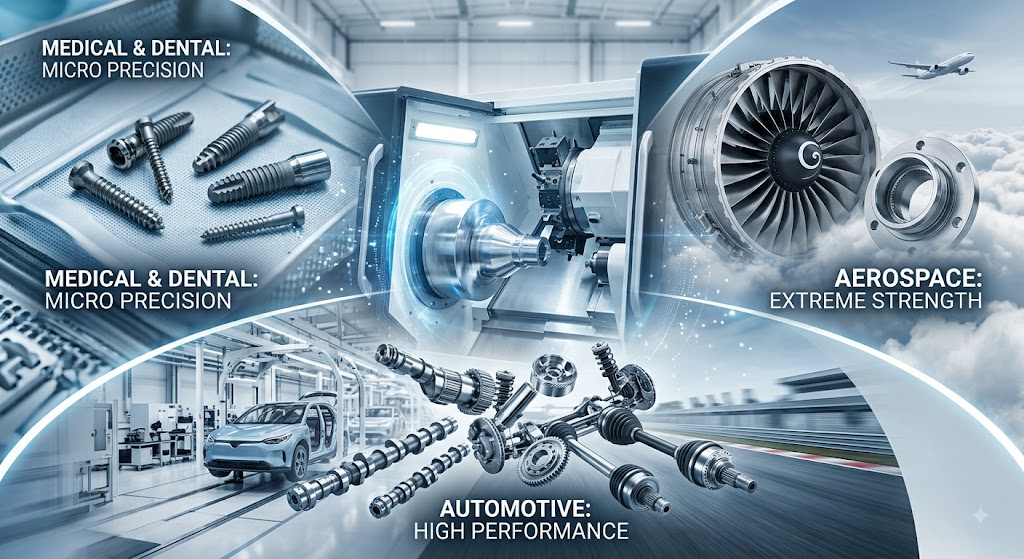
Whether you are producing high-speed turned transmission shafts, aerospace structural brackets, or medical device components, the physical and mechanical properties of the raw metal directly impact part functionality, tool wear, machining speed, and total unit cost.
This guide breaks down the most widely used metals in CNC machining—focusing on aluminum, steel and stainless steel, titanium, and brass—to help you select the optimal material for your custom precision parts.
Aluminum Alloys Lightweight Versatility and High Machinability
Aluminum is by far the most popular metal used in CNC milling and CNC turning. It offers an outstanding strength-to-weight ratio, excellent natural corrosion resistance, high thermal and electrical conductivity, and superb machinability. Because aluminum cuts quickly and causes minimal tool wear, it is one of the most cost-effective materials for both rapid prototyping and serial production.
Common CNC Aluminum Grades:
Aluminum 6061-T6: The industry standard for general-purpose CNC machining. It delivers an excellent balance of machinability, weldability, tensile strength, and corrosion resistance. It is widely used in automotive parts, structural components, and enclosure housings.
Aluminum 7075-T6: Known as aircraft-grade aluminum, 7075 is alloyed primarily with zinc. It provides a tensile strength comparable to many steels while remaining lightweight, making it the top choice for high-stress aerospace structures, performance automotive parts, and defense components.
Aluminum 5052 & 2024: 5052 offers superior fatigue strength and marine corrosion resistance, while 2024 is favored in aircraft applications requiring high fatigue performance.
Best Applications: Aerospace brackets, automotive enclosures, heat sinks, optical housings, and lightweight structural frames.
Steel and Stainless Steel Maximum Strength and Wear Resistance
When a project demands heavy-duty strength, high wear resistance, or extreme environmental durability, steel alloys and stainless steels are the definitive choices.
Carbon and Alloy Steels
Plain carbon steels (like Steel 1018) and low-alloy steels (like 4140) provide high tensile strength, toughness, and ductility. They are widely used for structural components, gears, and fasteners that undergo high mechanical stresses.
Stainless Steels
Stainless steel is alloyed with chromium and nickel to prevent rust and corrosion in harsh environments.
Stainless Steel 304 / 304L: The most common austenitic stainless steel. It features excellent corrosion resistance, high formability, and good weldability.
Stainless Steel 316 / 316L: Formulated with added molybdenum, 316 provides superior resistance to chlorides, salt water, and harsh chemical environments. It is widely used in marine hardware, chemical processing equipment, and medical devices.
Stainless Steel 303: Specifically formulated with sulfur for enhanced machinability, making it ideal for rapid CNC lathe turning of high-volume fasteners, shafts, and fittings.
17-4 PH Stainless Steel: A precipitation-hardening stainless steel that achieves exceptional hardness, mechanical strength, and corrosion resistance after heat treatment. It is frequently specified for critical aerospace flanges, pump shafts, and valve components.
Best Applications: Hydraulic valve bodies, automotive transmission shafts, fasteners, heavy machinery components, and medical surgical instruments.
Titanium Alloys Unmatched Strength to Weight and Biocompatibility
Titanium is a premium engineering metal celebrated for its extraordinary strength-to-weight ratio, extreme thermal stability, and complete biocompatibility. Although it is more challenging and costly to cut than aluminum or brass due to its low thermal conductivity, titanium’s performance in extreme environments is unmatched.
Key CNC Titanium Grades:
Titanium Grade 5 (Ti-6Al-4V): The workhorse titanium alloy, accounting for over 50% of global titanium usage. It provides extremely high mechanical strength, low weight, and outstanding corrosion resistance.
Titanium Grade 2: Commercially pure titanium that offers high ductility, excellent corrosion resistance, and good weldability.
Best Applications: Aerospace turbine components, aircraft structural fittings, medical orthopedic implants, surgical tools, and racing automotive parts.
Brass and Copper Superior Conductivity and Effortless Machining
Copper alloys—particularly brass—are among the easiest metals to machine on a CNC lathe or mill.
Brass
Brass (an alloy of copper and zinc) offers low friction, excellent electrical and thermal conductivity, non-sparking properties, and an attractive golden metallic finish.
Brass C360 (Free-Cutting Brass): Recognized as the benchmark material for machinability. It produces clean, short chips, allowing CNC lathes to run at extremely high spindle speeds with negligible tool wear.
Pure Copper
Pure copper (such as Copper C110) offers unmatched electrical and thermal conductivity. While it is softer and gummy to machine compared to brass, it is indispensable for custom electrical connectors, busbars, and heat exchangers.
Best Applications: Electrical terminals, threaded pipe fittings, fluid valves, bushings, bearings, and custom decorative hardware.
How to Select the Ideal Metal for Your Project
To choose the right material for your CNC machining project, evaluate your CAD model against four key criteria:
1.Operating Environment: Does the part require high corrosion resistance or thermal/electrical conductivity?
2.Weight Constraints: Does your design require weight reduction without compromising strength?
3.Budget & Production Volume: If unit cost is the primary factor, easy-to-machine metals like Aluminum 6061 or Brass C360 cut production times significantly.
4.Manufacturing Optimization: [To explore how smart part geometry lowers machining expenses across all metal grades, read our complete DFM Cost Optimization Guide].
Partner with CS Rapid MFG for Custom Metal CNC Machining
Whether your project requires high-speed aluminum turning, tight-tolerance 17-4 PH stainless steel milling, or titanium aerospace machining, CS Rapid MFG delivers precision custom metal components tailored to your exact specifications.
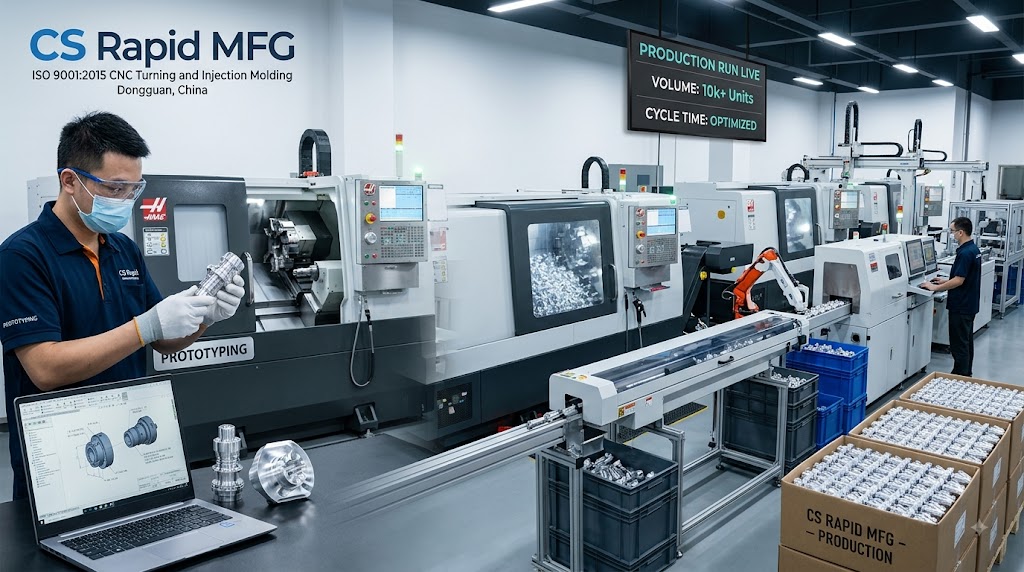
Located in Dongguan, China, our modern manufacturing facility operates under strict quality management systems and is proudly ISO 9001:2015 certified.
The CS Rapid MFG Advantage:
Advanced In-House Capacity: Our facility houses over 80 high-precision 3-axis, 4-axis, and Hermle/DUG 5-axis CNC machines alongside multi-axis live tooling lathes.
Rapid Delivery: We shorten product development cycles, delivering completed metal prototypes and production parts in as fast as 5 days.
Unbeatable Value: By leveraging optimized manufacturing workflows in China, we offer pricing that is +30% lower than western competitors without sacrificing quality.
Agile Flexibility: We enforce No Minimum Order Quantity (MOQ), supporting your project from a single prototype to full serial production.
Free DFM Analysis: Every inquiry receives a preliminary Design for Manufacturability (DFM) analysis report within 12 hours to verify material choices, tolerances, and tool paths.
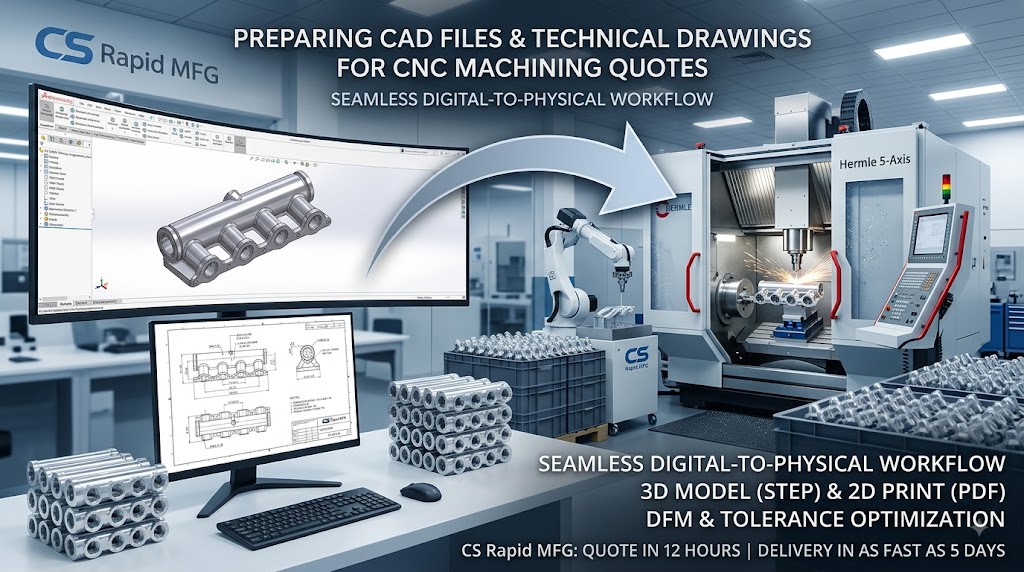
Ready to select your material and manufacture custom metal parts? Contact CS Rapid MFG today or upload your 2D and 3D CAD files for an instant quote within 12 hours.