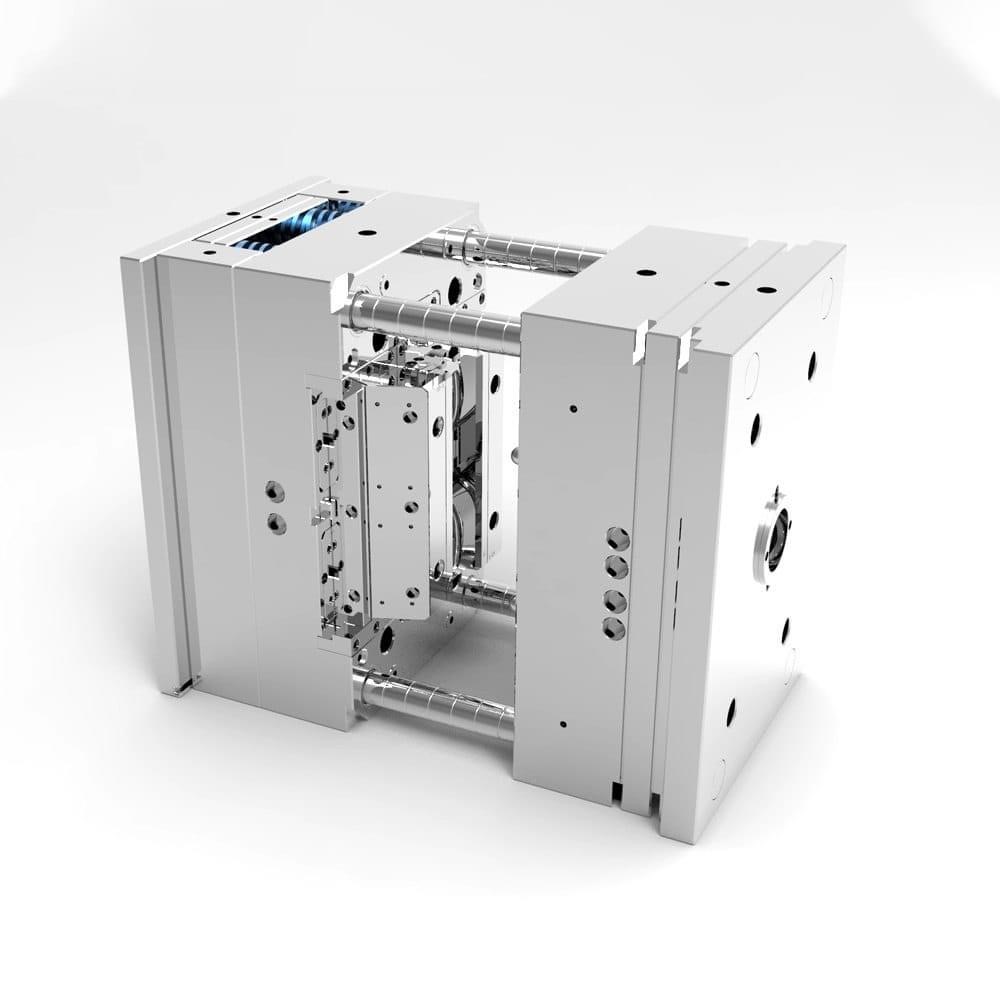
In injection molding mass production projects, cost control is often key to product market competitiveness. For projects where the design is complete, many purchasing managers believe the price is “fixed,” and the only way to save costs is to reduce supplier profits.
However, this is not the case. CS MOLDING’s experience accumulated over thousands of precision projects shows that true cost optimization often lies hidden in process details and mold strategies. If you want to reduce costs while maintaining quality (e.g., meeting the stringent tolerance requirements of robots or medical devices), the following 5 professional strategies will provide direct assistance.
1. Optimize Cavity Strategy: Balancing Unit Price and Mold Costs
The number of cavities is crucial to production efficiency. Should you choose a single-cavity mold or a multi-cavity mold?
- Low Budget Strategy: If your product is in the market testing phase (demand < 2,000 units), choosing a single-cavity mold can significantly reduce upfront mold manufacturing costs.
- High-Efficiency Strategy: When annual demand exceeds 10,000 units, increasing the number of cavities (although increasing mold costs) can significantly shorten the molding cycle, thereby amortizing unit processing costs.
Our recommendation: We will recommend the most economical cavity solution for you based on your projected annual demand and by calculating the return on investment (ROI).
2. Differentiated Mold Materials: Matching Product Lifecycle
Not all molds need to use the most expensive steel.
- Rapid Molding: In the pilot production phase, using aluminum alloy (7075 aluminum alloy) or P20 low-carbon steel molds is typically 30%-50% cheaper than using hardened steel molds, and delivery times are also faster.
- Long-Life Molds: For high-volume production projects, using hardened steel (such as S136 or H13), although requiring a larger initial investment, can guarantee 500,000 or even millions of strokes without damage, avoiding the hidden costs of mold maintenance during production.
Our recommendation: Choose rapid molds when demand is low; choose injection molds for mass production to reduce unit production costs.
3. DFM Refined Design: Eliminating Unnecessary Complex Structures
Small improvements can directly reduce mold costs without changing the core functionality of the product.
- Reduce Sliders and Ejector Pins: Each transverse core-pulling structure increases mold complexity and failure rate.
- Simplify Logic: CS MOLDING engineers will review your drawings and suggest whether costly slider structures can be eliminated by refining the parting surface, thereby reducing mold costs.
4. Surface Finishes: Balancing Aesthetics and Cost
Overly pursuing surface finish is a common budget killer.
- On-Demand Selection: For internal structural parts, choose SPI-C1 (fine sandpaper texture) or VDI sandblasted texture, which are significantly cheaper than SPI-A2 mirror polish.
- Function-Oriented: In some cases, textured surfaces are more conducive to demolding than smooth surfaces, thereby improving production efficiency and reducing scrap rates.
5. Integrated Supply Chain: Reduce Hidden Friction
If you require CNC machining, sheet metal fabrication, and injection molding simultaneously, outsourcing projects to different manufacturers incurs significant communication and logistical costs.
- One-Stop Advantage: CS MOLDING provides CNC machining, sheet metal fabrication, and injection molding services.
- Mitigating Risk: We handle the transition from CNC prototyping to injection molding mass production internally. This means we leverage prototyping data to directly optimize mold design, avoiding scrap risks caused by poor communication between suppliers.
Conclusion
Injection molding cost optimization is not a zero-sum game of “cutting corners,” but rather an engineering art of balancing and choosing. By conducting professional DFM review and mold flow analysis before mold opening, you can save thousands of dollars in subsequent corrective costs.
Want to know how much cost reduction potential your design has?
contact us, Simply send your 3D files, and our team of experts will provide you with a professional quote including cost reduction suggestions.