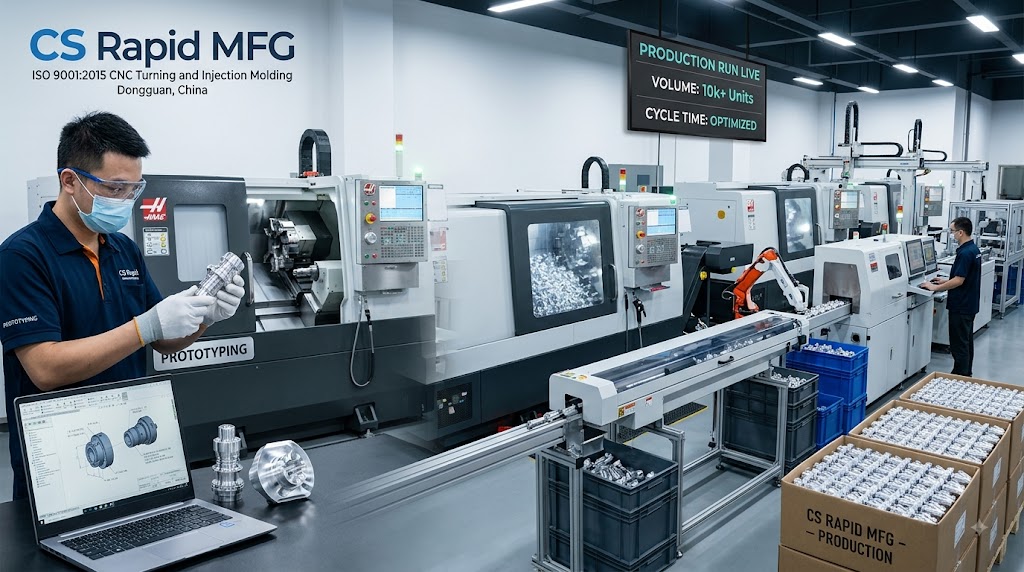
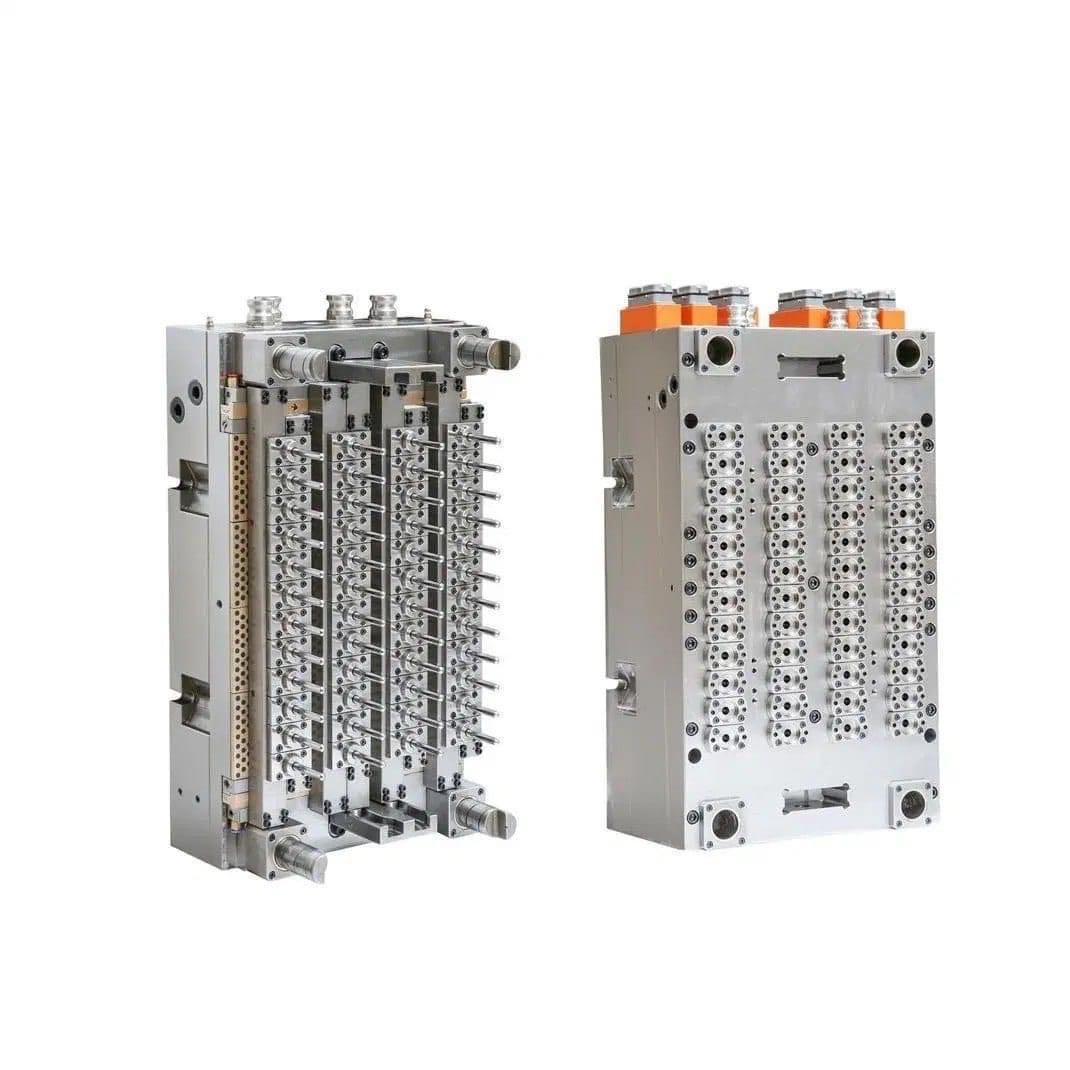
In machining, we often encounter this situation: a CNC plastic prototype has passed rigorous assembly and functional tests, performing flawlessly. However, when the customer confidently jumps directly into the injection molding mass production stage, they find that the resulting parts shrink, warp, or even cannot be removed from the mold.
Where does the problem lie? CNC is based on “subtraction logic,” while injection molding is based on “fluid logic.”
If your drawings haven’t been “genetically modified” for the injection molding process, a once-successful prototype can easily become a costly mold modification. Here are three of the most common “mass production traps” that engineers easily fall into.
Trap 1: Shrinkage Caused by “Arbitrary” Wall Thickness (Sink Marks)
In CNC machining, designing solid structures 10mm or even thicker is very simple to increase part strength.
- The Reality in Injection Molding: After the plastic melt enters the mold, thicker areas cool more slowly. When the surface layer has solidified while the interior is still shrinking, unsightly dents (shrinkage) will appear on the surface.
- Corrective Recommendation: Follow the principle of “uniform wall thickness.” For areas requiring strength, design them with thin walls and reinforcing ribs. This ensures both strength and a smooth, deformation-free part surface.
Trap 2: Ignoring the Physical Constraints of “Demolding” (Draft Angles)
CNC parts typically have perfectly vertical 90° sidewalls, common in machining.
- The Reality of Injection Molding: After injection molding, the mold needs to be pulled out. Without draft angles, the part will cling tightly to the mold core like a vacuum suction cup. Forcing it out can cause surface scratches (Galling) and, in severe cases, damage the mold.
- Corrective Recommendation: Design at least a 1°-2° draft angle for all vertical sides. If your part requires a textured surface, this angle should be increased further.
Trap 3: “Hidden” Stress Concentrations at Inner Right Angles
While CNC cutting tools leave tiny inner corner radii, engineers often habitually annotate sharp inner right angles in CAD.
- The Reality in Injection Molding: During injection molding, molten plastic experiences severe stress concentration when flowing over sharp corners. This means that while your mass-produced parts may “look” the same as the prototype, they are highly susceptible to brittle fracture at the corners under actual stress.
- Corrective Recommendation: Add radii to all joints whenever possible. This not only optimizes mold filling pressure but also extends the lifespan of your parts several times over.
How to Achieve a “Painless Transition”? — CS MOLDING’s Transition Strategy
To prevent customers from “stepping on landmines” during the transition to mass production, we offer a comprehensive risk hedging solution:
- Mandatory DFM Audit: Before you begin mold making, our engineers will conduct an in-depth injection feasibility analysis (DFM) based on your CNC prototype drawings. We will identify every design point that could lead to shrinkage or demolding failure.
- Rapid Tooling: If your project has a high mass production risk, we recommend creating an aluminum alloy mold for small-batch verification first. This method is low-cost, quick to modify, and acts as a “safety cushion” before officially entering mass production with steel molds.
- Mold Flow Analysis: Using software to simulate the flow of plastic within the mold, we can predict weld lines and air trapping locations in advance, resolving problems on the computer screen, not at the machine.
Conclusion
An excellent manufacturing service provider should not merely passively receive drawings, but proactively anticipate risks. At CS MOLDING, we not only deliver parts for you, but also safeguard every technical detail from “idea” to “scale.” Is your CNC prototype ready to “transform” into an injection molded part? Send us your design, and let CS MOLDING’s expert team conduct a free mass production risk assessment for you.
Would you like to receive a cost optimization proposal for your current project? Please feel free to contact us; we will provide you with a detailed quotation and expert recommendations within 24 hours.