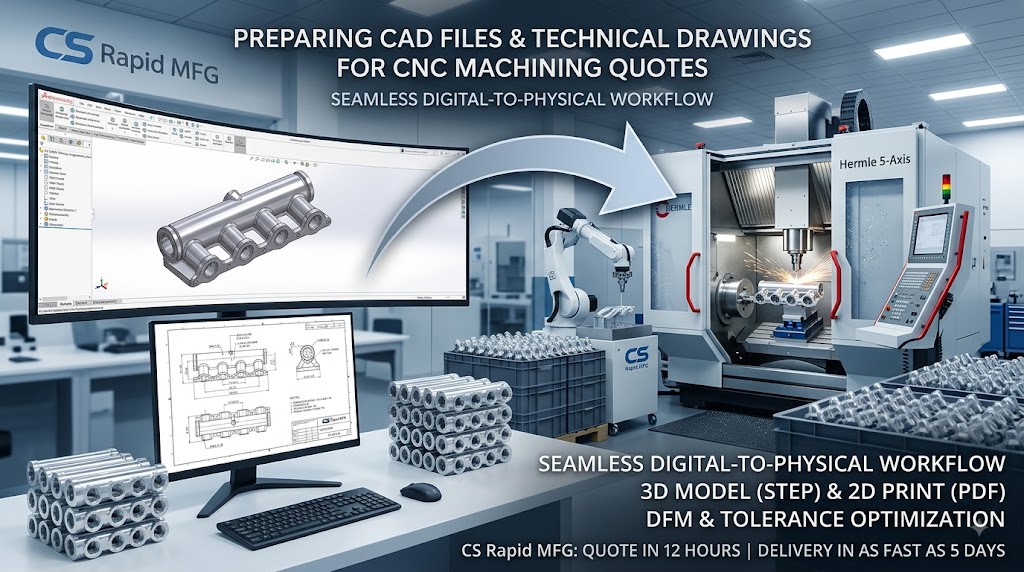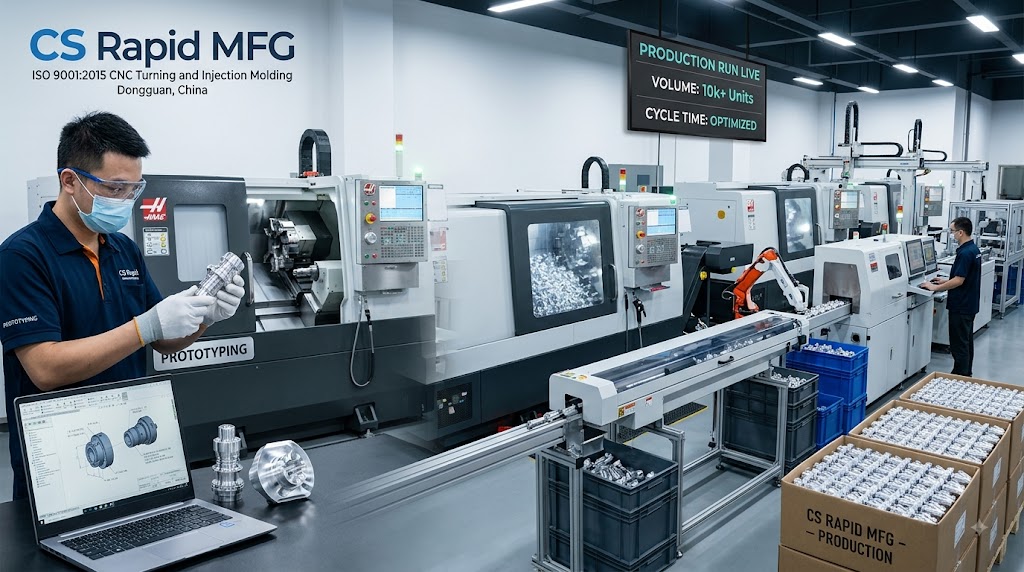

In the early stages of product development, engineers typically select plastic rod stock—such as ABS, PC, POM, or PEEK—to rapidly fabricate functional prototypes using CNC machining. This approach eliminates the need for molds, allowing for quick validation of a design’s fit and functionality.
However, once your product has passed validation and demand escalates from 50 units to 1,000 or more, continuing to produce plastic parts via CNC machining becomes prohibitively expensive. At this juncture, injection molding emerges as the inevitable choice. A critical caveat, however: the underlying design logic for CNC-machined plastic parts differs fundamentally from that of injection-molded parts.
I. The Transition Decision: When Is It Time to Commission an Injection Mold?
Although the per-unit cost of injection molding is extremely low, the upfront tooling costs—ranging from several thousand to tens of thousands—represent a significant initial investment.
- CNC Plastic Machining: Ideal for production runs of 1 to 200 units. Its primary advantage lies in rapid turnaround times and the ability to modify the design at any stage.
- Injection Molding (Mass Production): When annual demand exceeds 500 to 1,000 units, the total cost—once amortized—becomes significantly lower than that of CNC machining.
CS MOLDING Recommendation: If your design has remained free of major revisions for over three months, and you anticipate a steady demand over the coming six months, it is the optimal time to commission an injection mold.
II. Core Design Modifications: From “Subtractive” to “Additive”
CNC machining creates shapes by using cutting tools to “carve away” material, whereas injection molding creates shapes by allowing molten material to “fill” a mold cavity.
To ensure successful injection molding, you must implement the following adjustments to your original CNC design drawings:
- Wall Thickness Consistency (The Golden Rule): CNC-machined parts can feature very thick, solid sections; however, if an injection-molded part exceeds 4mm in wall thickness, the slow internal cooling rate can lead to surface defects such as sink marks or internal voids.
- Correction Recommendation: Redesign thick, heavy sections to utilize a “thin-wall-plus-ribs” structural configuration.
- Mandatory Draft Angles: The side walls of CNC-machined parts can be perfectly vertical; however, injection-molded parts *must* incorporate a certain degree of taper (draft). Without this angle, the part will become stuck within the mold cavity, preventing ejection or even causing surface damage (drag marks). Internal Fillet Optimization: CNC milling inevitably leaves internal corners; however, incorporating fillets (radii) into injection molding designs serves a purpose beyond mere aesthetics. It is primarily intended to reduce injection pressure and minimize stress concentrations, thereby preventing parts from cracking during use.
III. Performance Discrepancies: Why Do Prototypes and Production Parts Feel Different?
Even when utilizing the exact same material grade (e.g., ABS from the same manufacturer), subtle performance differences persist between CNC-machined parts and injection-molded parts:
Anisotropy: CNC parts retain the internal stresses induced during the extrusion of the raw stock material, whereas the strength of injection-molded parts is influenced by injection pressure and the location of weld lines.
Surface Finish: CNC parts typically exhibit minute tool marks, whereas the surface finish of injection-molded parts depends entirely on the finish applied to the mold cavity (e.g., SPI-A2 mirror polish or MT-11010 textured finish).
IV. CS MOLDING’s “Seamless Transition” Service
We understand the growing pains associated with transitioning from plastic CNC machining to injection molding. To help you mitigate risks during this process, we offer the following services:
- Rapid Tooling: We utilize aluminum or soft steel molds to produce an initial batch of 500 to 2,000 parts for market validation—a cost-effective and rapid solution.
- In-Depth DFM Analysis: Our engineers will conduct a comprehensive comparison between your original CNC drawings and the proposed injection molding design, identifying which tolerances can be relaxed for injection molding and which must be strictly maintained.
Conclusion
Transitioning from plastic CNC prototyping to mass production via injection molding is an essential milestone in a product’s journey toward maturity. A successful transition not only allows you to reduce unit costs by over 70% but also ensures consistent product quality across the entire production run.
Would you like to receive a cost optimization proposal for your current project? Please feel free to contact us; we will provide you with a detailed quotation and expert recommendations within 24 hours.