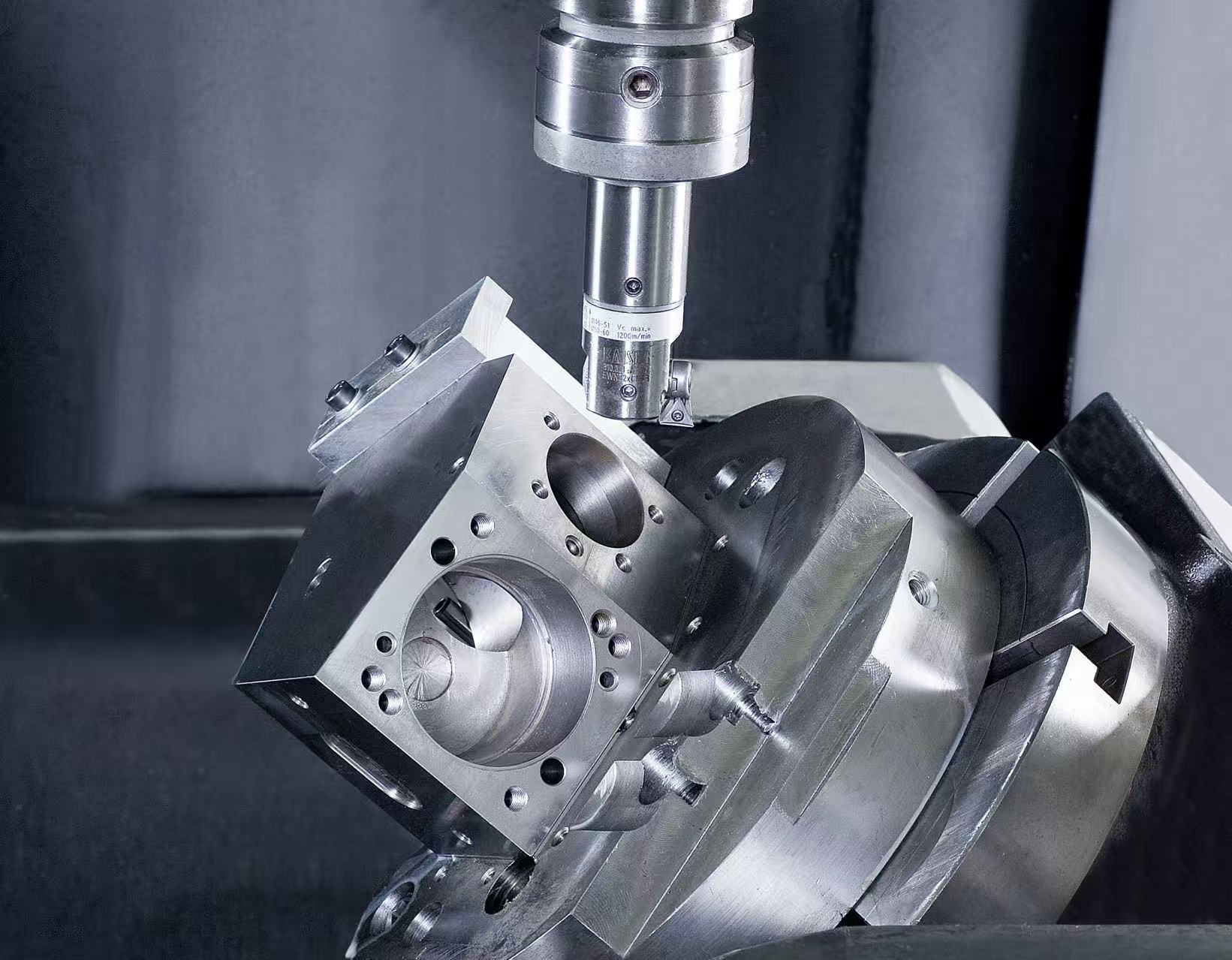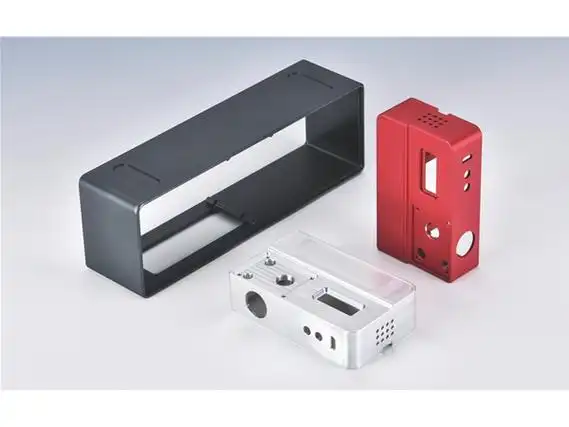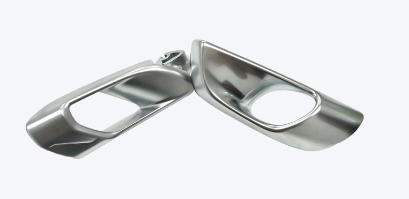
As medical devices become smaller, more complex, and require increasingly higher precision, traditional three-axis machining shows limitations in terms of structure, accuracy, and efficiency. Five-axis CNC machining, with its powerful ability to process complex geometric structures, is playing an increasingly important role in the medical device industry.
Why are medical devices increasingly reliant on five-axis CNC machining?
Medical device parts typically have the following characteristics:
- Multi-angle holes and complex curved surfaces
- Extremely high requirements for dimensional consistency and assembly accuracy
- Frequent use of difficult-to-machine materials such as titanium alloys and stainless steel
Five-axis CNC machining can complete multi-sided machining in a single setup, significantly reducing clamping errors and improving part accuracy and surface quality, making it an ideal choice for the demanding applications in the medical device industry.
Typical Application Scenarios of Five-Axis CNC Machining in Medical Devices
1. Minimally Invasive Surgical Instruments and Endoscope Parts
Minimally invasive surgical instruments are usually compact, have complex curved surfaces, and require extremely high machining accuracy.
Typical parts:
- Endoscope structural components
- Minimally invasive surgical instrument connectors
- Multi-angle through-hole parts
Five-axis machining advantages:
- One-time forming of complex curved surfaces
- Ensuring relative positional accuracy between multiple holes
- Improving assembly consistency and reducing rework risk
2. Surgical Instruments and High-Precision Functional Components
Surgical instruments need to remain stable and reliable during surgery, and the machining accuracy of the parts directly affects safety of use.
Typical parts:
- Surgical knife handles
- Orthopedic surgical instrument parts
- High-precision connecting components
Five-axis machining advantages:
- Reduced clamping times, ensuring the stability of critical dimensions
- Better surface quality, facilitating subsequent polishing and passivation treatments
- Suitable for commonly used medical materials, such as titanium alloys and stainless steel
3. Precision Components for Medical Automation and Diagnostic Equipment
In medical automation and diagnostic equipment, many parts require long-term stable operation, with strict requirements for concentricity, parallelism, and surface quality.
Typical parts:
- Guiding components
- Transmission mechanism parts
- Optical system brackets
Five-axis machining advantages:
- High precision ensures long-term stable operation of the equipment
- Integrated machining of complex structures reduces assembly errors
- Improved part consistency, suitable for small-batch repetitive production
4. Prototype Development and Small-Batch Production of Medical Parts
Medical device product development cycles are short, and design iterations are frequent. Five-axis CNC machining offers significant advantages in the prototyping and small-batch production stages. Application value:
- Rapid verification of complex structural designs
- Reduced accuracy risks associated with multiple setups
- Provides a stable process foundation for subsequent mass production
Key advantages of five-axis CNC machining compared to three-axis machining:
- Multi-sided machining in a single setup, resulting in higher accuracy
- More suitable for complex curved surfaces and multi-angle hole machining
- Reduced processing steps and human error
- Improved surface quality and overall consistency
For medical devices with complex structures and high precision requirements, five-axis machining is often the superior choice.
Conclusion
Five-axis CNC machining is becoming an important manufacturing method in the medical device industry. It not only addresses the challenges of complex structures and high-precision machining but also helps medical device manufacturers improve product reliability, shorten development cycles, and reduce assembly risks.
For projects involving minimally invasive surgical instruments, endoscopes, medical automation, or high-precision components, CS MOLDING, with its five-axis CNC machining capabilities and experience in the medical industry, will be your best manufacturing partner, providing a solid guarantee for your product quality and project success.