
With the rapid development of medical technology, medical devices are becoming increasingly diverse in function, and the design of components is becoming increasingly complex. The medical industry has extremely high requirements for the precision, reliability, material properties, and surface quality of parts. Whether it’s surgical instruments, diagnostic equipment, or medical automation systems, every component can affect the performance of the equipment and even patient safety. Against this backdrop, precision CNC machining has become an indispensable core technology in medical device manufacturing.
What is Precision CNC Machining?
CNC (Computer Numerical Control) machining is a manufacturing method that uses computer programs to control machine tools to cut parts. Precision CNC machining can achieve micron-level tolerance control, machining of complex geometries, and high-quality surface treatment, making it ideally suited to the high-precision component requirements of the medical device industry.
Applications of Precision CNC Machining in the Medical Equipment Industry
1. Surgical Instruments and Minimally Invasive Devices
- Applications: Scalpel handles made of titanium alloy or stainless steel, orthopedic implants, joint device connectors
- CNC Advantages: High precision ensures operational safety; machining of complex curved surfaces adapts to human anatomy, reducing assembly errors.
2. Precision Components for Diagnostic Equipment
- Applications: Guide components, transmission gears, optical device supports
- CNC Advantages: Ensures long-term accuracy and stability of equipment; supports machining of multiple materials (titanium alloy, stainless steel, aluminum alloy, engineering plastics).
3. Parts for Medical Automation Equipment
- Applications: Infusion pump parts, blood analyzer parts, micro-mechanical components
- CNC Advantages: High-precision machining ensures smooth movement, improving equipment reliability and durability.
4. Small-Batch Prototyping and Customized Parts
Medical equipment development cycles are short, and product iterations are rapid. CNC machining supports rapid prototyping and small-batch production, providing reliable support during design verification and clinical trials.
Core Advantages of Precision CNC Machining
High Precision and Consistency
Medical device parts typically require tolerances within ±0.01 mm or even tighter. Precision CNC machining ensures dimensional stability and high geometric accuracy for each part, meeting stringent medical standards.
Complex Part Machining Capability
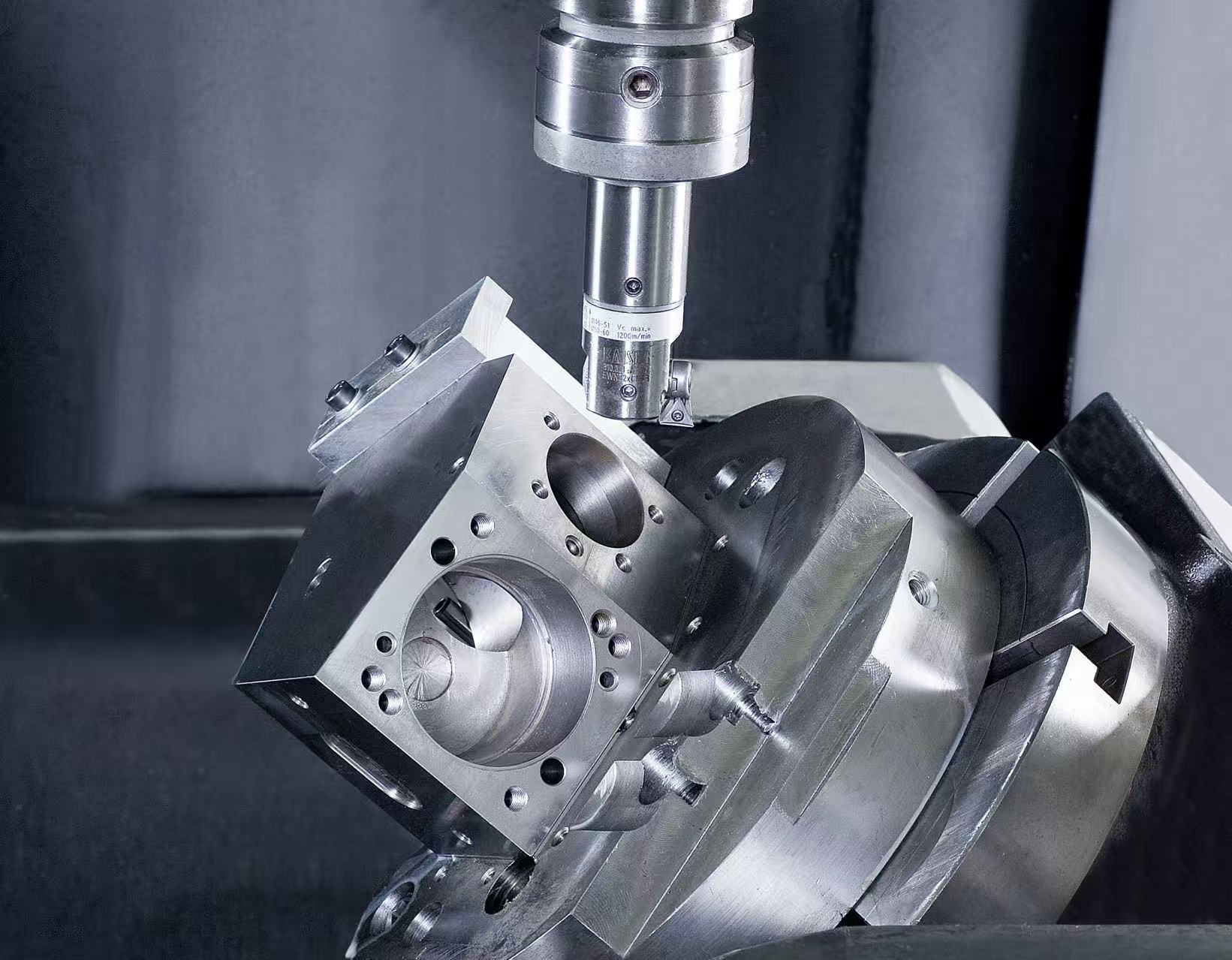
Five-axis CNC machining can process complex curved surfaces, parts with multiple holes, and inclined surfaces, enabling multi-face machining in a single setup, reducing errors and processes, and improving efficiency.
Multi-Material Adaptability
Medical device parts involve a variety of materials:
- Metals: Stainless Steel 316L, Titanium Alloy Ti-6Al-4V, Aluminum Alloy 6061/7075
- Engineering Plastics: PEEK, POM, PTFE
Precision CNC machining allows for customized toolpaths and cutting parameters for different materials, ensuring machining results and surface quality.
Surface Treatment and Subsequent Machining Compatibility
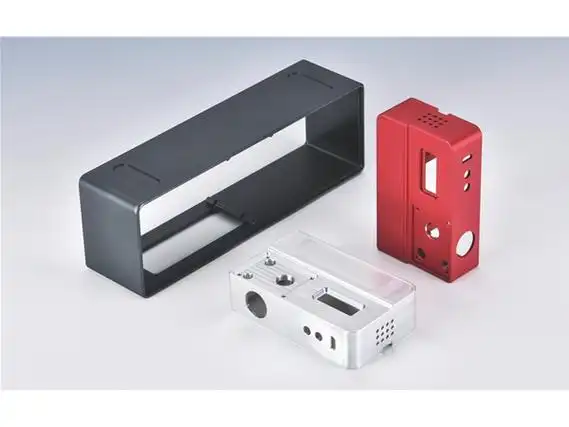
CNC-machined parts have smooth surfaces that can be combined with surface treatments such as polishing, electropolishing, anodizing, and passivation, meeting the requirements of medical devices for easy cleaning, corrosion resistance, and sterilization.
Rapid Prototyping and Small-Batch Production
Medical device development often involves customized design. CNC machining supports rapid prototyping, reducing development cycles and helping R&D teams validate designs, optimize functionality, and quickly move to clinical or mass production stages.
Industry Trends and Future Development
- Miniaturization and Complexity: Medical devices are becoming increasingly smaller, with more complex component structures, leading to a greater reliance on five-axis CNC machining.
- Materials Innovation: The increasing use of high-performance materials such as titanium alloys and PEEK necessitates continuous optimization of CNC machining tools, cutting parameters, and fixture design.
- Automation and Digitalization: Intelligent CNC machine tools and digital manufacturing processes enable end-to-end data tracking, complying with medical industry quality management standards such as ISO 13485.
- Rapid Response to Customization: The growing demand for personalized medical devices and small-batch customized parts allows CNC machining to flexibly respond to rapid production needs.
Conclusion
Precision CNC machining is not only the foundation of medical device manufacturing but also a core force driving innovation and safety in the medical industry. Through high-precision machining, complex structure realization, multi-material support, and superior surface treatment, it helps medical device manufacturers:
- Improve the precision of surgical instruments and equipment
- Shorten R&D cycles
- Reduce equipment failure risks
- Achieve integrated machining of complex parts
For medical device companies, choosing a partner with precision CNC and five-axis machining capabilities means obtaining reliable guarantees in R&D, production, and quality control, thereby maintaining a leading position in the fierce market competition.
If you are developing or upgrading a medical device project, we can provide full-process support from precision CNC machining to five-axis machining to help you achieve high-precision parts manufacturing, rapid prototyping, and high-reliability production.