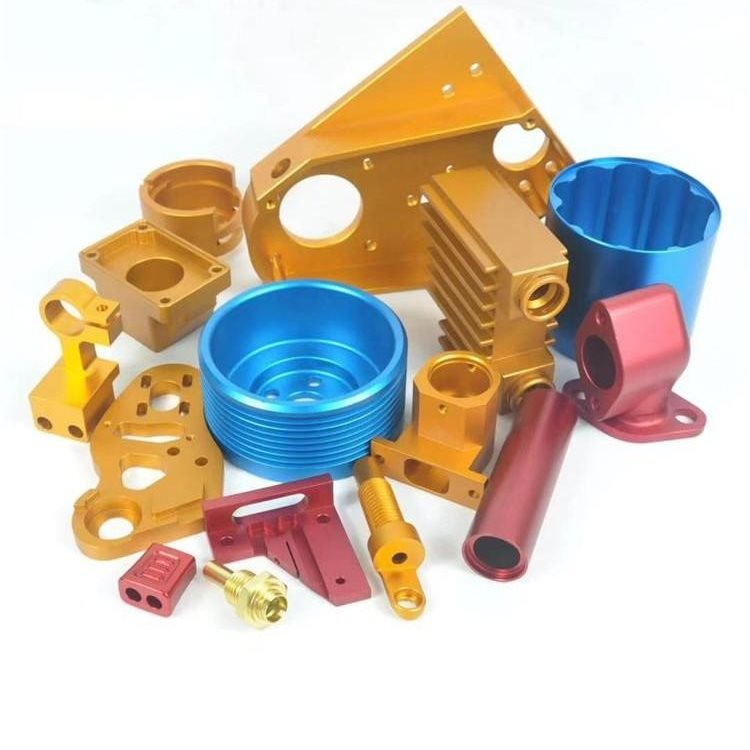
In the realm of custom manufacturing, surface finishing serves a purpose far beyond mere aesthetics; more critically, it endows parts with specific functional attributes—such as oxidation resistance, enhanced hardness, or superior electrical conductivity. As the final step in the manufacturing process, selecting the appropriate surface finishing technique can elevate your product from merely “adequate” to truly “exceptional.”
Common Surface Finishing Techniques
1. Bead Blasting — Creating a Uniform Matte Texture
If you wish to eliminate the faint tool marks left behind by CNC machining, bead blasting is undoubtedly the quickest and most economical solution.
- Effect: By propelling fine abrasive beads at high velocity, this process creates a uniform, non-reflective matte finish on the part’s surface.
- Advantages: It provides an ideal substrate for subsequent anodizing or painting processes, ensuring excellent adhesion without altering the part’s dimensional tolerances.
2. Anodizing — A Protective Barrier for Aluminum Alloys
This is the most widely used surface finishing method for aluminum parts, broadly categorized into two main types: Decorative Anodizing (Type II) and Hard Anodizing (Type III).
- Anodizing (Type II): Allows parts to take on a variety of colors—such as red, black, blue, or gold—while retaining the aluminum’s inherent metallic luster.
- Hard Anodizing (Type III): Generates a thicker oxide layer, significantly enhancing surface wear resistance and electrical insulation properties; it is frequently used for industrial components subject to abrasion.
3. Powder Coating— The Ultimate in Durability
If your parts require exceptional corrosion resistance, or if they need to precisely match a specific RAL color code (such as bright yellow or industrial green), powder coating is your optimal choice.
Features: It forms a protective layer that is tougher and more impact-resistant than traditional liquid paints, making it ideally suited for finishing outdoor equipment and sheet metal enclosures.
4. Electroless Nickel Plating — The Epitome of Precision and Uniformity
Unlike traditional electroplating processes, electroless nickel plating achieves coating deposition without the need for an external electric current. Advantages: Regardless of the complexity of a part’s geometry—even if it features characteristics such as deep holes or internal cavities—this process creates a coating of absolutely uniform thickness across the entire surface. Furthermore, it offers exceptional resistance to both abrasion and chemical corrosion.
Material Compatibility Guide
Before selecting a specific surface finishing process, the primary and critical first step is to verify the exact material composition of your parts. Listed below are common metal materials and their applicable surface finishing processes:
- Aluminum Alloys (6061/7075):
The most widely used materials. They are perfectly compatible with processes such as anodizing, sandblasting, powder coating, and chemical conversion coating (chromate conversion). If you are seeking a surface finish that combines both aesthetic appeal and durability, the combination of aluminum alloy and anodizing is undoubtedly the industry’s “gold standard.”
- Stainless Steel (303/304/316):
Typically requires no additional protective surface treatment. The most common treatments are passivation (used to remove surface iron ions) or electropolishing (used to achieve a mirror-like finish).
- Carbon Steel / Alloy Steel:
Due to their high susceptibility to rust, these materials typically require zinc plating, blackening (black oxide), or powder coating. Blackening imparts a low-reflectivity black appearance to the part while having a negligible impact on its dimensions.
- Copper / Brass:
Common surface finishing options include electroplating with nickel, gold, or silver (to enhance conductivity or oxidation resistance), or simply retaining the material’s natural color while applying an anti-tarnish (anti-oxidation) treatment.
Expert Guide: How to Mitigate Risk—Balancing Cost and Quality
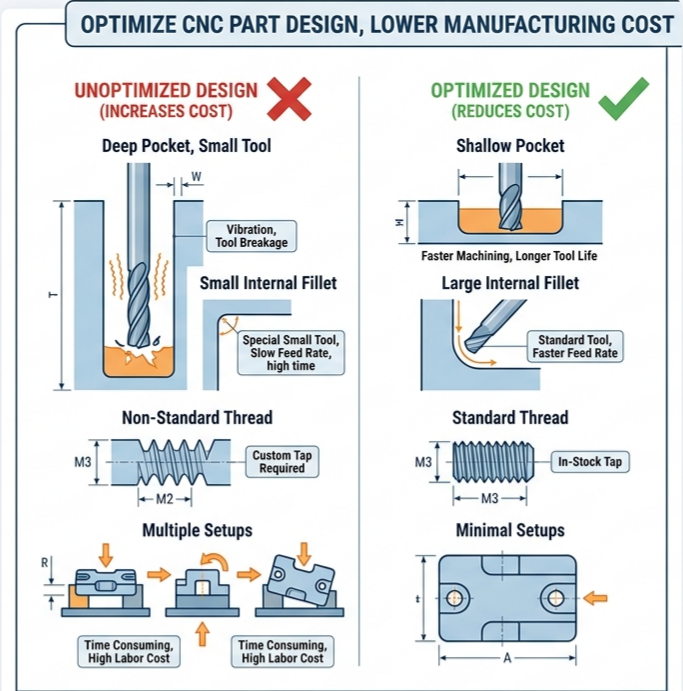
Tolerance Considerations: Processes such as powder coating and hard anodizing can significantly alter a part’s dimensions. At CS MOLDING, we recommend that clients clearly specify on their technical drawings: “Dimensional requirements apply [before/after] surface finishing.”
Avoid Sharp Edges: During powder coating or electroplating, electrical charges tend to concentrate at sharp corners, resulting in uneven coating thickness. Incorporating small fillets (rounded edges) into your design can significantly improve the quality of the final surface finish.
Thread Protection: If your parts feature high-precision threads, it is essential that you inform us of the need for masking protection. This prevents coating buildup, ensures the coating does not interfere with thread engagement, and guarantees that bolts can be screwed in smoothly.
Conclusion
Selecting the appropriate surface finishing process serves not only to provide protection but, more importantly, to enhance the critical “first impression” your product makes on your customers. If you have any remaining questions regarding the compatibility of specific materials with various surface finishing processes, please feel free to send your STEP files to CS MOLDING; our engineers would be delighted to provide you with personalized, one-on-one technical consultation services.
Would you like to receive a cost optimization proposal for your current project? Please feel free to contact us; we will provide you with a detailed quotation and expert recommendations within 24 hours.